Atomic Habits Book Review: if you have ever started a study routine with great enthusiasm and then given up after a few days, this book was written for you. In this Atomic Habits Book Review, I look at James Clear’s international bestseller, explain its main ideas in simple language, and show how students can use them to build better study habits without relying on motivation alone.
Atomic Habits Book Review: What Is the Book About?
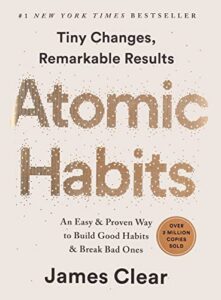
Atomic Habits: An Easy & Proven Way to Build Good Habits & Break Bad Ones is a self-help book by James Clear. It was published on 16 October 2018 by Avery Publishing in the United States. The book is about habit formation: how small habits work, why they are so powerful over time, and how anyone can design a system that makes good habits easier and bad habits harder.
Clear’s central idea is simple and encouraging. You do not need a huge change to change your life. You need
small improvements, repeated every day. He calls this getting 1% better each day. A 1% improvement may feel tiny on its own, but when it is repeated for months and years, the results compound, just like compound interest. That is why the book has become so popular with readers, students, teachers, and professionals around the world. By February 2024, it had sold nearly 20 million copies and had spent 260 weeks on the New York Times bestseller list, according to Wikipedia.
The Core Idea: Focus on Systems, Not Goals
One of the most useful lessons in this Atomic Habits Book Review is Clear’s distinction between goals and systems. A goal is the result you want, such as passing an examination or finishing a course. A system is the set of small actions you repeat every day to reach that result. Clear argues that winners and losers often have the same goals, so what makes the difference is the system behind the goal.
He also explains that every habit follows the same four steps: a cue, a craving, a response, and a reward. First, you notice a cue, such as your phone on your desk. Then you feel a craving, such as wanting to check messages. Next comes the response, picking up the phone, and finally the reward, the short feeling of entertainment or relief. If you understand this loop, you can change it. You can remove a bad cue, or you can design a good cue, such as keeping your textbook open on your desk so that studying is the first thing you see.
Clear also puts identity at the centre of lasting change. Instead of saying, “I am trying to study more,” he suggests thinking, “I am the kind of person who studies every day.” Every small action is then a vote for that identity. When you complete a short study session, you are not only learning a little more; you are proving to yourself that you are a serious student.
The Four Laws of Behaviour Change
The heart of the book is the Four Laws of Behaviour Change. Clear uses these four laws to show how to build a good habit, and he reverses them to show how to break a bad one.
1. Make It Obvious
Make the cue for a good habit clear and visible. Put your books where you can see them, prepare your study space the night before, and write down exactly when and where you will study. If you want to break a bad habit, do the opposite: make it invisible. Keep your phone in another room while you study.
2. Make It Attractive
We repeat habits that feel enjoyable. Clear suggests pairing a habit you need to do with something you enjoy, for example listening to calm music while you revise, or studying with a friend. He also suggests joining a group where good study habits are normal, because we often copy the behaviour of the people around us.
3. Make It Easy
Reduce the effort needed to start. Clear recommends the Two-Minute Rule: start with a version of the habit that takes less than two minutes, such as reading one page or writing one paragraph. Starting is usually the hardest part. Once you have started, it is much easier to continue. He also recommends habit stacking, which means attaching a new habit to a habit you already do every day, for example: “After I finish breakfast, I will revise vocabulary for ten minutes.”
4. Make It Satisfying
We repeat habits that feel rewarding. Clear suggests tracking your habit, for example by marking a calendar each day you study, and trying not to break the chain. He also advises that you should never miss twice. Missing once is an accident; missing twice can become the start of a new, unhelpful pattern. When you get back on track quickly, a single missed day does not ruin your progress.
Get your copy of Atomic Habits on Amazon
How Students Can Use Atomic Habits
For students, this book is especially practical. That is why this Atomic Habits Book Review recommends starting small and staying consistent. Many students do not fail because they lack ability; they fail because their study system is weak. They study only before examinations, they study in a distracting environment, or they wait for motivation that never arrives. Atomic Habits offers a different approach: study a little every day, in the same place, at the same time, and let the habit carry you on difficult days.
A student could use habit stacking to revise after lunch, use the Two-Minute Rule to open the textbook even on a tired day, and use a simple habit tracker to see progress. A student could also design the environment by keeping the phone away, keeping water and notes ready, and clearing the desk before studying. These are small changes, but together they make studying the easy choice rather than the hard one. For more general advice on studying well, see the study guides on Study Note BD.
What I Liked About the Book
In this Atomic Habits Book Review, I found the book clear, practical, and easy to read. Clear uses short chapters, real stories, and simple examples from sport, business, and everyday life. He does not ask readers to change everything at once. Instead, he gives them a small step they can try today. The ideas are also flexible: a student, a teacher, a parent, or a working person can adapt the same four laws to their own routine.
I also liked that the book is honest about difficulty. It does not promise instant success. It says that habits take time, that you will sometimes miss a day, and that the answer is to return to the system rather than to blame yourself.
What Could Be Better
The book is not perfect. Some readers may find that a few ideas are repeated in different chapters, and some of the research is presented in a simplified way. The book is a practical guide, not a scientific textbook, so readers who want deep academic detail may want to read further. Even so, for most readers, the simplicity is a strength, because it makes the ideas easy to remember and to use.
Who Should Read Atomic Habits?
This Atomic Habits Book Review is for students who want to study regularly, for anyone who wants to build a good habit such as reading, exercise, or writing, and for anyone who wants to break a bad habit such as wasting time on social media. It is also useful for teachers and parents who want to help young people build steady routines. You do not need any special background to enjoy it. The language is simple, and every chapter ends with a clear idea you can apply.
Final Verdict
In this Atomic Habits Book Review, my verdict is clear: Atomic Habits is one of the most useful books a student can read. It does not rely on motivation or willpower. It teaches you to design your environment, start small, track your progress, and become the kind of person who follows through. If you read it slowly, try one idea at a time, and give the system a few weeks, you are likely to see a real change in how you study and how you work.
I would rate it 4.5 out of 5. It is practical, encouraging, and easy to apply, and its main message is one worth remembering: small habits, repeated daily, can lead to remarkable results. You can read more about the book on the author’s website, James Clear’s Atomic Habits page, and check the book’s background on Wikipedia.
Frequently Asked Questions
Who wrote Atomic Habits?
Atomic Habits was written by James Clear, a writer and speaker who focuses on habits, decision making, and continuous improvement.
When was Atomic Habits published?
Atomic Habits was published on 16 October 2018 by Avery Publishing.
What are the Four Laws of Behaviour Change in Atomic Habits?
The Four Laws of Behaviour Change are: make it obvious, make it attractive, make it easy, and make it satisfying. To break a bad habit, Clear reverses them: make it invisible, unattractive, hard, and unsatisfying.
Is Atomic Habits good for students?
Yes. This Atomic Habits Book Review finds Atomic Habits very good for students because it shows how to study a little every day, design a distraction-free study space, use habit stacking and the Two-Minute Rule, and keep going after a missed day.
Is Atomic Habits worth reading?
Yes, in my view it is worth reading, and this Atomic Habits Book Review concludes that it is a book to keep on your shelf. It is practical, easy to understand, and full of small steps that students and other readers can start using straight away.
Available on Amazon
Atomic Habits: An Easy & Proven Way to Build Good Habits & Break Bad Ones by James Clear
As an Amazon Associate, I earn from qualifying purchases.
One comment
Pingback: Deep Work Book Review: Best Complete Guide 2026