Deep Work Book Review: if you have ever sat down to study, opened your books, and then lost an hour to your phone, this book was written for you. In this Deep Work Book Review, I look at Cal Newport’s bestselling book, explain its main ideas in simple language, and show how students can use them to study with real focus in a world full of distractions.
In this Deep Work Book Review:
- What Is the Book About?
- Deep Work vs Shallow Work
- The Four Rules of Deep Work
- How Students Can Use Deep Work
- Final Verdict
- Frequently Asked Questions
Deep Work Book Review: What Is the Book About?
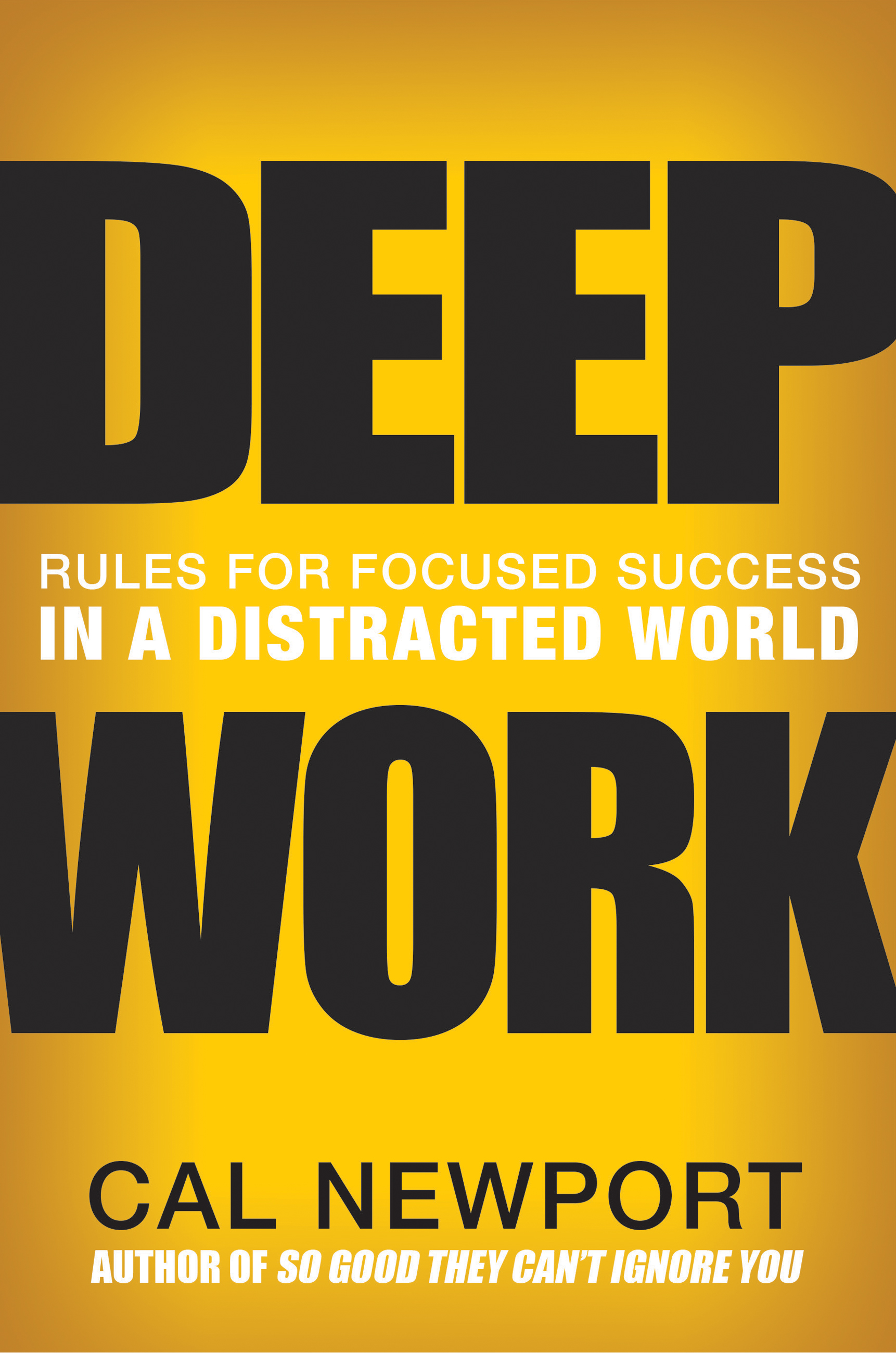
Deep Work: Rules for Focused Success in a Distracted World is a book by Cal Newport, a bestselling author and professor of computer science. It was published on 5 January 2016 by Grand Central Publishing. The book is about focus: why the ability to concentrate without distraction has become rare, why it has become valuable, and how anyone can train it.
Newport defines deep work as the ability to focus without distraction on a cognitively demanding task. When you work deeply, you learn difficult things faster and you produce work of a higher quality. A student doing deep work is not just reading notes while checking messages; the student is fully engaged with one difficult topic, thinking hard about it, and making real progress.
The book is divided into two parts. In the first part, Newport makes the case that deep work is valuable, rare, and meaningful. In the second part, he gives four rules that show how to build deep work into everyday life. This Deep Work Book Review follows that same order, so you can understand the idea first and then learn how to use it.
Deep Work vs Shallow Work
One of the most useful ideas in this Deep Work Book Review is Newport’s distinction between deep work and shallow work. Shallow work is work that is not cognitively demanding, is often done while distracted, and is easy to copy or repeat. Answering routine emails, checking messages, and filling in forms are examples of shallow work. It feels busy, but it does not create much new value, and it does not help you learn anything difficult.
Most of us spend far too much of the day on shallow work. We check our phones, reply to messages, and move between small tasks, and at the end of the day we feel tired but have little to show for it. Newport argues that the people who will do well in the future are those who can learn hard things quickly and produce excellent work, and both of those skills depend on deep work. For students, the message is clear: the hours you spend in real, focused study matter far more than the hours you spend looking busy.
Newport also points out that deep work is rare because our tools and habits work against it. Phones, social media, and constant messages train us to expect a new distraction every few minutes. That is why focus must be trained, not just wished for. The four rules in the book are his training plan.
The Four Rules of Deep Work
The heart of the book is its four rules. Each rule is simple to understand, but each one asks for a real change in how you spend your time.
1. Work Deeply
The first rule is to schedule deep work and protect it. Newport suggests choosing a way of working that fits your life: some people need long, unbroken blocks of time, while others build a daily rhythm of shorter focused sessions. What matters is that deep work is planned in advance, not left to chance. A student could use this rule by fixing one or two hours each day for the hardest subject, switching the phone off, and treating that time as an appointment that cannot be moved.
2. Embrace Boredom
The second rule is to train your attention by learning to be bored. If you reach for your phone every time you wait for a bus, stand in a queue, or feel even slightly bored, you are teaching your brain that it cannot concentrate without a quick reward. Newport argues that the ability to concentrate deeply depends on the ability to resist distraction at all times, not only during study. A student who practises waiting without a phone, walking without music, or thinking through a problem without looking for a quick answer will find it much easier to focus when it matters.
3. Quit Social Media
The third rule is the most direct: quit social media, or at least use it far more carefully. Newport does not say that every online tool is bad. He suggests judging each tool by whether it clearly supports something important in your life, and quitting the ones that mainly waste your attention. For many students, social media is the biggest source of shallow distraction. Deleting an app, or keeping it off the phone during study hours, can free a surprising amount of time and attention for real learning.
4. Drain the Shallows
The fourth rule is to reduce the shallow work in your day so that deep work has room to grow. Newport suggests planning each day in advance, deciding how much time shallow tasks should take, and saying no to work that does not help your main goals. A student can use this rule by planning study blocks the night before, finishing small tasks such as messages and chores in one short period, and keeping the rest of the day free for focused study.
Get your copy of Deep Work on Amazon
How Students Can Use Deep Work
For students, this Deep Work Book Review recommends starting with one change at a time. First, choose a fixed time and place for your hardest study each day, and keep your phone in another room during that time. Second, work on one subject at a time instead of switching between books, notes, and messages. Third, plan the next day the evening before, so you start studying without wasting time deciding what to do.
Short, focused sessions also work well. A student could study for 50 minutes without any distraction, take a short break, and then start again. Over a week, those focused sessions add up to far more real learning than many longer hours spent half-distracted. It also helps to keep a simple record of deep work hours, so you can see your progress and stay motivated.
Finally, students can use the rules together. Quit or limit the apps that distract you most, batch small tasks such as replying to messages into one short period, and protect your best hours of the day for the subjects that need the deepest thinking. You do not need a perfect routine. You need a routine that gives your attention a fair chance.
What I Liked About the Book
In this Deep Work Book Review, I found the book clear, practical, and easy to follow. Newport explains a big idea in plain language and then gives concrete steps that a reader can try the same day. The four rules are easy to remember, and each one can be used on its own, so a reader does not have to change everything at once to benefit from the book.
I also liked that the book is honest about the difficulty. It does not promise that focus is easy. It says that distraction is normal in the modern world, that deep work takes practice, and that the reward is worth the effort: better learning, better work, and a greater sense of satisfaction at the end of the day.
What Could Be Better
The book is not perfect for every reader. Some of its advice is written for people with flexible working lives, while students often have fixed class times, group work, and messages they must answer. Quitting social media can also be hard when class groups and teachers use it to share notices. Even so, the main ideas still apply: a student can limit distractions and protect focused time, even if every rule cannot be followed exactly.
Who Should Read Deep Work?
This Deep Work Book Review is for students who want to study with more focus, for anyone who feels busy all day but finishes little, and for anyone who wants to learn a difficult skill. If you liked this Deep Work Book Review, you may also like our Atomic Habits Book Review. It is also useful for teachers and parents who want to help young people build better attention habits. You do not need any special background to enjoy it. The language is simple, and every rule comes with examples you can adapt to your own routine.
Final Verdict
In this Deep Work Book Review, my verdict is clear: Deep Work is one of the most useful books a student can read about focus and studying. It does not rely on motivation or willpower. It teaches you to schedule focused time, train your attention, cut the distractions that waste it, and clear away shallow work so that real learning has room to grow. If you read it slowly, try one rule at a time, and give the new habits a few weeks, you are likely to see a real change in how you study and how you work.
I would rate it 4.5 out of 5. It is practical, encouraging, and easy to apply, and its main message is one worth remembering: in a distracted world, the ability to focus deeply is a superpower.
Frequently Asked Questions
Who wrote Deep Work?
Deep Work was written by Cal Newport, a bestselling author and professor of computer science.
When was Deep Work published?
Deep Work was published on 5 January 2016 by Grand Central Publishing.
What are the four rules of Deep Work?
The four rules of Deep Work are: Work Deeply, Embrace Boredom, Quit Social Media, and Drain the Shallows.
What is the difference between deep work and shallow work?
Deep work is focused work on a cognitively demanding task, without distraction. Shallow work is work that is not cognitively demanding, is often done while distracted, and is easy to copy or repeat, such as routine emails and messages.
Is Deep Work good for students?
Yes. This Deep Work Book Review finds Deep Work very good for students because it shows how to schedule focused study time, keep the phone away, limit social media, and spend less of the day on shallow tasks.
Is Deep Work worth reading?
Yes, in my view it is worth reading, and this Deep Work Book Review concludes that it is a book to keep on your shelf. It is practical, easy to understand, and full of small steps that students and other readers can start using straight away.
Available on Amazon
Deep Work: Rules for Focused Success in a Distracted World by Cal Newport
As an Amazon Associate, I earn from qualifying purchases.