If you have ever told yourself “I am just not good at maths” or “I am not a talented writer”, this Mindset Book Review is for you. In Mindset: The New Psychology of Success, Stanford psychologist Carol S. Dweck explains a simple idea that changes how you see your own ability: it is not your talent that decides how far you go, but what you believe about your talent.
Dweck spent decades studying how students respond to challenge, and her conclusion is both hopeful and practical. Your intelligence is not a fixed number you are born with. It can grow — if you work at it in the right way. In this Mindset Book Review, I explain the two mindsets, the key lessons of the book, and how students can use them to study better, handle failure, and keep improving.
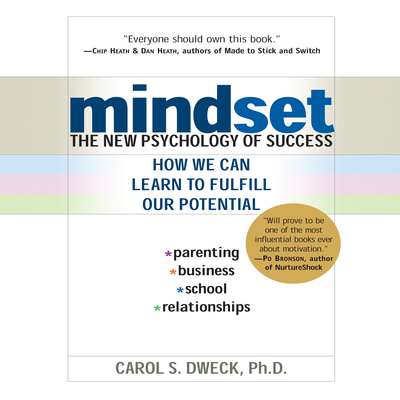
Mindset by Carol S. Dweck: Quick Facts
- Author: Carol S. Dweck, Ph.D.
- First published: 28 February 2006 (Random House); updated edition 2016
- Publisher: Random House / Ballantine Books
- Pages: 320
- Best for: Students, teachers, parents, and anyone who wants to learn faster and handle setbacks better
What Is Mindset About?
The book is built around one question: do you believe your basic qualities, like intelligence and talent, are fixed traits, or do you believe they can be developed? Dweck calls the first belief the fixed mindset and the second the growth mindset. The difference sounds small, but it changes almost everything — how you study, how you react to a bad grade, whether you take on hard subjects, and how you handle criticism.
A student with a fixed mindset thinks, “If I fail this test, it proves I am not smart.” A student with a growth mindset thinks, “If I fail this test, I need a better way to prepare.” Same test, same result — completely different response. Over months and years, that difference in response becomes a large difference in results.
The Two Mindsets: Fixed vs Growth Mindset
The Fixed Mindset
In a fixed mindset, you believe intelligence and talent are set in stone. Success then becomes a test: every exam, every assignment, every performance is a chance to prove you are smart — or a risk of proving you are not. People with a fixed mindset often: avoid difficult challenges, because failure would expose their limits; give up quickly when something feels hard; ignore useful feedback, because it feels like criticism of who they are; feel threatened when others succeed.
Dweck’s research shows that even very able students can fall into this trap. When your main goal is to look smart, the safest choice is always the easy task.
The Growth Mindset
In a growth mindset, you believe abilities can be developed through effort, good strategies, and help from others. The brain, Dweck explains, is like a muscle: it grows stronger when you use it and challenge it. People with a growth mindset often: seek out difficult challenges, because challenge is how learning happens; keep going after setbacks, and change their strategy instead of quitting; treat feedback as useful information, not as a judgement; find inspiration in the success of others.
The important point is that nobody is purely one or the other. You can have a growth mindset about writing and a fixed mindset about maths. Mindset is not a label you wear for life — it is a belief you can notice, question, and change.
Key Lessons from Mindset
1. Praise Effort, Not Intelligence
One of Dweck’s most famous findings — a highlight of this Mindset Book Review — is about praise. In her studies, children who were praised for being smart (“You are so clever!”) tended to choose easier puzzles afterwards — they wanted to protect their image. Children praised for effort (“You worked really hard on that!”) chose harder puzzles, because they wanted to learn more. The lesson for students and parents is clear: praise the process — the effort, the strategy, the persistence — not the talent. “You found a good way to solve that problem” builds a growth mindset. “You are a genius” can quietly build a fixed one.
2. The Power of “Yet”
Dweck popularised a tiny word with a large effect: “yet”. “I can’t do this” is a fixed-mindset sentence — it closes the door. “I can’t do this yet” leaves the door open. It turns a fact about today into a plan for tomorrow. Students can use this immediately. Change “I am bad at English” to “I am not good at English yet.” It sounds like a small trick, but it changes what you do next: instead of avoiding English, you practise it.
3. Failure Is Information, Not Identity
In a fixed mindset, failure means “I am a failure.” In a growth mindset, failure means “this approach did not work.” The first reading ends the story; the second one starts a new chapter. Dweck shows that successful people in business, sport, and science are not people who never fail. They are people who treat failure as data — what went wrong, what can I change, what should I try next? For a student, a low mark on a test is not a verdict on your intelligence. It is a report on your preparation.
4. Effort Needs Strategy, Not Just More Hours
Dweck is careful about one misunderstanding: a growth mindset does not mean “just try harder.” Effort alone, repeated in the same failing way, does not help. What works is productive effort — trying a different method, asking for help, breaking the problem into smaller parts, and reviewing your mistakes. So when you are stuck, do not only ask, “How can I work harder?” Ask, “How can I work differently?” That is the growth mindset in practice.
5. You Can Change Your Mindset
Perhaps the most hopeful message of the book is that mindsets are not permanent. Dweck writes about students, athletes, managers, and teachers who shifted from a fixed mindset to a growth mindset and saw real change in their results and their confidence. Change starts with noticing your own fixed-mindset voice — the voice that says “I will never be good at this” or “people will think I am stupid.” You do not have to obey that voice. You can answer it with evidence: times you improved, skills you built from zero, and problems that once looked impossible.
How Students Can Use Mindset While Studying
- Start with “yet”: When a subject feels impossible, add “yet” and make a plan. “I can’t solve these maths problems yet — I will practise ten a day this week.”
- Choose the harder problem: If you always pick the easy questions, you protect your grade but stop your learning. Growth comes from the questions that stretch you.
- Review your mistakes properly: After every test, go through each wrong answer and write down what you misunderstood. That is where the real learning lives.
- Ask for help early: In a growth mindset, asking a teacher for help is not admitting you are weak. It is using a resource.
- Track your progress: Keep a short note of what you could not do last month and can do now. Seeing your own growth is the best proof that your brain can change.
If you like books that turn psychology into practical study habits, you may also enjoy our Atomic Habits Book Review and our Deep Work Book Review — both are about building better systems for learning and focus.
Get your copy of Mindset on Amazon
Who Should Read Mindset?
Mindset is an excellent choice for students who feel stuck in a subject, for exam candidates who fear failure, and for teachers and parents who want to encourage children in the right way. It is written in clear, simple English, with stories from schools, sports, and business that make the research easy to follow.
The book is not perfect. Some readers find the middle chapters repetitive, because the same idea is shown again and again in different settings. And Dweck herself has warned that the idea is sometimes oversimplified into “just try harder” — which is not what the research says. Read it for the core framework and the praise research, and you will get a great deal from it — that is the conclusion of this Mindset Book Review.
Frequently Asked Questions
What is the main idea of Mindset by Carol Dweck?
The main idea of Mindset — the starting point for this Mindset Book Review — is that people hold one of two beliefs about ability: a fixed mindset (intelligence is a fixed trait) or a growth mindset (ability can be developed through effort, good strategies, and help). That belief shapes how you handle challenges, failure, and feedback.
Is Mindset a good book for students?
Yes. As this Mindset Book Review explains, it is one of the most useful books a student can read, because it directly addresses exam fear, giving up too early, and the belief that “I am just not good at this subject.” The language is simple and the examples are easy to follow.
What is the difference between a fixed mindset and a growth mindset?
In short, as this Mindset Book Review explains, a fixed mindset believes intelligence and talent cannot change, so the goal is to prove yourself and avoid failure. A growth mindset believes abilities can grow, so the goal is to learn — which means seeking challenges and treating setbacks as information.
How long is Mindset by Carol Dweck?
The paperback edition has 320 pages, as noted in this Mindset Book Review. Most readers finish it in a few days of steady reading, and the chapters work well one at a time.
What does “the power of yet” mean?
It means adding the word “yet” to a fixed statement: “I can’t do this yet.” It changes a dead end into a plan, and it is one of the simplest growth-mindset habits a student can practise every day.
Mindset Book Review: Final Verdict
Mindset is a book every student should read at least once. It does not give you a study timetable or a memory trick. It gives you something more basic: a better belief about yourself. Once you believe your ability can grow, hard work starts to make sense, failure stops feeling like a verdict, and learning becomes something you do on purpose rather than something that happens to you — the central message of this Mindset Book Review.
For that reason, this Mindset Book Review gives the book a firm recommendation — not as a magic solution, but as a foundation. Read it, notice your fixed-mindset voice, and practise answering it with “yet”. Your grades, and your confidence, will follow.
Available on Amazon
Mindset by Carol S. Dweck
As an Amazon Associate, I earn from qualifying purchases.